Whip A Girl For Lupercalia
Have you flogged your sweetie with a strip of fresh goatskin, yet, today? If not, you’d better get after it! Today’s Lupercalia, and time’s a-wastin’!
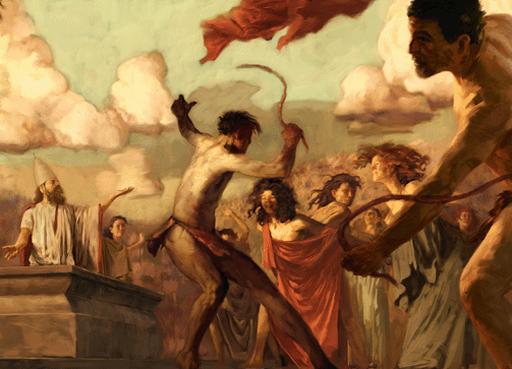
I rely for my authority about proper Lupercalian rituals on no lesser historian than the great Plutarch, who wrote in Life of Caesar:
At this time many of the noble youths and of the magistrates run up and down through the city naked, for sport and laughter striking those they meet with shaggy thongs. And many women of rank also purposely get in their way, and like children at school present their hands to be struck, believing that the pregnant will thus be helped in delivery, and the barren to pregnancy.
As for the connection between Luperalia and the holiday we now celebrate at St. Valentine’s Day, it is somewhat loose, but it’s detailed by Maggie McNeill at The Honest Courtesan, who expands upon Plutarch by explaining:
The ceremonies were presided over by the Luperci, goatskin-wearing priests of Lupercus (also called Faunus), who sacrificed a dog and two billy goats and anointed younger priests with the blood. After the sacrificial feast the Luperci would cut rough strips from the skins of the sacrificed goats and then young men of the equestrian and senatorial classes would run around the Palatine Hill swinging these makeshift lashes; girls and young women would line up along the parade route because it was believed that being struck by the whips conferred a blessing which would ensure fertility and ease the pains of childbirth. This popular celebration was eventually abandoned by the upper classes around the time of Julius Caesar, but it remained popular with the lower classes into Christian times until its observance was banned by Pope Gelasius I in 496.
See Also: